Category: Neurofeedback
A Remarkable Medicine Has Been Overlooked
 For a number of years I’ve had a fascinating book on my shelf. Every once in a while I pull it down and draw courage from it. I resolve to write a newsletter about it at some point, and then it goes back on the shelf. It is the autobiography of Jack Dreyfus, he of the Dreyfus Fund, Lion of Wall Street, who turned his interests to medicine in the later part of his career to promote greater utilization of Phenytoin (Dilantin, PHT) for a whole host of medical conditions.
The frustrations he faced in his mission were in many ways parallel to what we have faced in neurofeedback. Perhaps it is still not too late for us to draw some lessons from his experience. Dreyfus suffered a first major depression at the age of 45 in 1958. Onset was quite sudden, as he awakened one morning in a state bordering on terror, overwhelmed with fear. The dominant symptom was a turned-on mind that was always riveted on negative thoughts related to anger and fear. But there were other symptoms as well, including daily headaches, frequent stomach irregularities, chronic neck pain, lack of energy, trembling of limbs, and cold hands and feet. The depression was major for a year, but continued for five years. Over a period of years he would see his doctor, a neuropsychiatrist, five or six times a week. That must have been more for companionship than relief, because relief was not on offer.
Dreyfus observed that his sudden mood swings would occur without any apparent provocation, either psychological or environmental. On one occasion, a young woman took his hand and massaged his fingers. Tension drained from him, which he sensed as electricity leaving his body. This triggered recollections of earlier encounters with electricity, such as when he received a shock from an electric wall socket as a child and experienced intense fear such as he was feeling now in his depression. On a couple of occasions he had an experience of sleep paralysis. He felt that he was awake but he could not move or open his eyes. His memory of the event was one of being frozen with electricity. Continue reading “A Remarkable Medicine Has Been Overlooked”
The Ongoing Saga of Infra-low Frequency Training
 Our infra-low frequency training is sending ripples through the field of neurofeedback because it appears to represent such a fundamental departure from prevailing models. It is at such a bifurcation point that a professional community is tested in its assumptions, in its procedures, in its processes for finding accommodation, and indeed in its humanity. Unfortunately, the field of neurofeedback already has a history of fragmentation behind it. Therefore history does not augur for a benign accommodation to our new findings. More than likely we will just be in for continuing Balkanization of our field.
The first response has been skepticism, much of it animated by the thought that this new approach has just suddenly sprung upon the scene without sufficient research and scientific support. In fact, of course, the infra-low training is just the culmination of a long development process that goes back more than ten years. There have been many milestones along the way, each of which was well-established both clinically and scientifically before we moved on. In particular, our march to probe the low-frequency training has taken place in five distinct epochs over that period of time. We have now been exploring the domain below 1.5 Hz for more than two years, and the domain below 0.05 Hz for more than one year.
Our new findings present the greatest “affront” to the classical QEEG perspective, namely that the guide to neurofeedback protocol is to be found in the stationary deviations in QEEG variables from established norms. The hope has been that the QEEG formalism would give neurofeedback the necessary rigor, predictability, and reproducibility to finally achieve respectability in polite circles. This has not yet happened. Under the pressure of rejection, the response has been to adhere to the model with ever greater rigor, all the while critiquing other neurofeedback modalities that were not compliant. Unfortunately, the QEEG perspective has the propensity to become a kind of closed system that confers validity on its own data preferentially. Because the belief system was the prime mover here, there has been a tendency to recognize data that supports the model and to dismiss data that contradicts it. Continue reading “The Ongoing Saga of Infra-low Frequency Training”
Progress in the Veterans Program
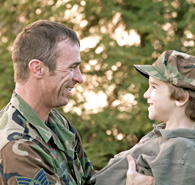 We have just completed an introductory training course which included some thirty mental health professionals who are currently working with returning veterans and active duty servicemen. Represented were the United States Navy, the Marine Corps, the Veterans Administration, and the Salvation Army. The intention is to begin pilot projects at a number of facilities to demonstrate neurofeedback efficacy in realistic settings for PTSD and TBI (traumatic brain injury).
With this additional participation, we had our largest training course to date, with some 48 attendees—a logistical challenge to our team. The remaining clinicians who could not be accommodated will come to the January course. We are also prepared to extend invitations to VA personnel from other parts of the country who want to bring neurofeedback into their facilities, on a space-available basis.
The presence of so many clinicians who were not closely acquainted with neurofeedback presented an unusual challenge. Customarily nowadays attendees come with their batteries already charged because of some prior exposure to neurofeedback–either from their own experience, that of one or more of their clients, or on the recommendation of a trusted colleague. They no longer need to be convinced; they just want to learn how to do the work. Accordingly, our training program has been shaped more and more toward the tactics and the practical experience of doing neurofeedback, to the relative neglect of the rich and quirky research history of the biofeedback field and of the scientific models that underpin neurofeedback. Continue reading “Progress in the Veterans Program”
On the Life of John Menkes
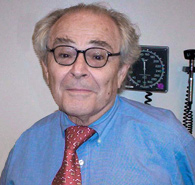 John Hans Menkes was a well-known pediatric neurologist here in Los Angeles. He just died of cancer at the age of 79. He was well-known for having discovered what came to be known at Menkes syndrome, a rare childhood disorder. He is also the author of the “Textbook of Child Neurology” that has been the standard of the field for some thirty years. I write about him here because he played a role in the lives of two of our children. When our daughter Karen was diagnosed with a brain tumor at some seven months of age, it was John Menkes who referred us to the University of San Francisco for chemotherapy. In retrospect, the pursuit of all medical options with our daughter was probably unwise. She was effectively an experimental animal, pioneering a variety of treatments. In the case of the chemotherapy, for example, she was the youngest ever to be so treated. There weren’t even any guidelines for dosing infants at the time. Continue reading “On the Life of John Menkes”
Infra-low Frequency Neurofeedback Training
The following newsletter is now mainly of historical interest. Discussed here is the design of the first-generation Cygnet, which was intended for operation within the conventional EEG spectrum. There was no recognition yet of the need to cover the extremely low frequency region. The follow-on design, which became available in 2012, was optimized for operation across the entire band, including in particular the infra-low frequency region extending down to 0.1mHz. (Siegfried Othmer, 1/6/2015)
The recent newsletter on Infra-low Frequency Training raised a number of issues within our readership and within the larger neurofeedback community. The principal issues are addressed in the following.
First of all there is the issue of how we detect infra-low frequency activity with an amplifier that “cuts off” at 0.08 Hz. The Cygnet system incorporates a single stage of high-pass filtering into its design. We did so to provide more stable and more graceful operation of the system in its most common applications. Little did we know that down the line our most common applications would extend well into the frequency range that we were cutting off with our filter.
A single stage of filtering yields a gentle filter function, with an attenuation of a factor of ten for a factor of ten in frequency. This is best shown in a graph that uses logarithmic scales, particularly since we are now covering such a broad range in frequency. The amplifier transfer characteristic is shown in Figure 1. At a frequency of 0.008 Hz, for example, our system gain is a factor of ten down from the cutoff frequency of 0.08. Whether or not this presents a real problem is not a matter of the signal level, but rather of the signal-to-noise ratio. At low frequencies, we tend to refer to this as drift rather than noise, but there is no real distinction implied here. Continue reading “Infra-low Frequency Neurofeedback Training”