In Memoriam: Marjorie Toomim

One of the privileges of working in the early development of a field is that most of the pioneers are still around, and we get to know them all personally. We have lost Neil Miller, Chuck Stroebel, and Barbara Brown, and now Marjorie Toomim, but most of the people from the early days of the field are still with us.

I attended a lecture by Marjorie some years ago at a Biofeedback Society of California Conference in which she described some of her most difficult cases. At the end I asked her if she would rank these cases in her mind in the order of the clinical challenge that they represented to her, and whether she would be more or less likely to use biofeedback at the more difficult end of that distribution. She answered at once that the more severe the challenge, the more she would rely on her skills as a psychotherapist. In fact, when she did use biofeedback techniques, she would often use them simply as information for herself rather than as information for the patient. “I was never so humbled in my work as when my instrumentation told me that I was wrong.” Continue reading “In Memoriam: Marjorie Toomim”
Report on the Winter Brain Conference

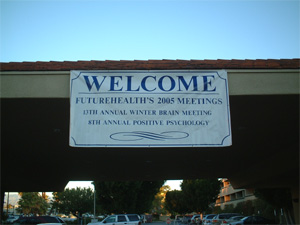
future_health.jpgThis was the thirteenth Winter Brain Conference, the first in some time without its own special T-shirt. The crowd was somewhat smaller this year than in the past couple of years. This tends to happen when the location stays the same for too many years, although the Hilton was certainly a good host, and the local weather gods were favorably disposed as well. The exhibit area was noisy and boisterous again. The conference was significantly “privatized” this year, with more training seminars booked before and after the Conference. This took away some of the energy from the conference itself, but it was nevertheless another opportunity to mix it up with the other people who are thankfully pushing the boundaries of this field. In that regard, this conference remains unique for its accepting and inclusive ambience.
The Winter Brain Conference continues with its traditional quirks: A Foundations Course that goes from 8 AM until 10 PM; plenary sessions that start before 8 in the morning; a schedule that drags out for five days; and a prohibitive admission fee that must discourage the casual attendee. The value of the conference is surely equivalent to that of a training course, but people may not know that when they have to commit their funds and time; many others don’t start out with that level of commitment to the field. The conference again paired the Winter Brain Conference with StoryCon, so both sides of the brain were being engaged. There was unfortunately no communal acknowledgement of the death of Marjorie Toomim. So Hershel had to handle this himself. And the after-dinner speaker this time was a comedian who tried to engage us with irrelevancies. What a come-down after we had been spoiled the last couple of years with Swami Beyondananda, and after the national tragedy of our recent election. Continue reading “Report on the Winter Brain Conference”

Winter Brain Conference

We are once again at the threshold of the Winter Brain Conference. Preliminary conferences are already going on. This year will mark the entry of EEG Support into the hardware business. With the help of a few gnomes of Zurich we have developed a QIKtest device that allows us to run a variety of choice reaction time tests like the CPTs we are used to. Just working through the development process has been liberating to our thinking. There has been controversy among users about just how fast progress in TOVA terms can be made with various techniques. We’ve been reluctant to subject people to a lot of such tests because they are such an imposition on people. Now we have a choice.

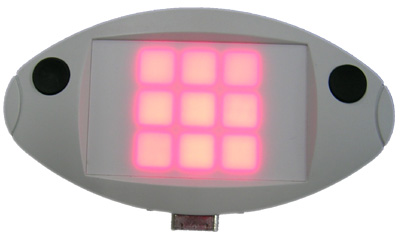
qik.jpgThe QIKtest

The new device has nine LED fields in a 3×3 array, and a left and right button for responding. Auditory challenges are available as well. Any combination of LEDs can be used to represent the “go” or “no-go” condition. The tests can be down-loaded through a serial connection from the clinician’s computer to the device. The device stores the test results internally, until they are uploaded to the computer, where the results are then displayed. The data is then uploadable to the EEG Expert website for progress tracking over sessions. Continue reading “Winter Brain Conference”

The State of the Union

With the State of the Union speech coming up shortly, it’s not a bad time for us to do the same with regard to our discipline of neurofeedback. When people are asked about the prospects for society at large, they tend to assess it somewhat more negatively than society deserves, but when they are asked about their own prospects, they tend to assess them too positively. If only a fraction of everybody’s dreams were realized, what a growth rate there would be! We may be subject to the same bias. The world around us may have dim prospects, but our field is doing fine, thank you.

There is first of all a change in the attitudes with which our claims are being met. Neurofeedback is no longer being dismissed out of hand. The publication pipeline is filling up, and mainstream media are publishing articles about neurofeedback. The latest article in new Scientific American quarterly, Mind, did not even feel it necessary to issue a disclaimer: Neurofeedback is the coming thing for ADHD. Continue reading “The State of the Union”

The Determination and Management of Risk

I had chosen this topic to end the year well before the recent tsunami brought home to us the disconnect between risks that we face–as societies, as a global community, as a species, and as individuals–and how we actually live our lives. This is a follow-up to the previous newsletter on Triage.

What got me started down this track was the December 5 issue of Parade Magazine, which featured an article by Michael Crichton that lampooned our tendency to overstate risk of future catastrophe and to over-react to it. First of all, this seemed strange coming from the person who has made a living by exaggerating risk: “The Andromeda Strain”, “Jurassic Park”, and “Prey.” But that’s science fiction, and this is real life. Continue reading “The Determination and Management of Risk”

Pain

Making a Case for the Exercise Model

We have just submitted a paper to the JNT in support of the proposition that inter-hemispheric training can remediate attentional deficits irrespective of the presenting complaints. In the back-and-forth with the editors that has by now taken some months, their frustration is apparent that we never seem to come up with the kind of data that simply nails it. If this technique is indeed as effective as we say, then why not just show some EEG data which makes this obvious. The reason we don’t show such EEG data is that we don’t wish to promote the wrong conclusion. If we showed EEG data that proved our hypotheses, then an EEG criterion or EEG litmus test would follow, which would be a mistake in our view.

Rarely do we have the chance to prove this to the world, since we don’t bother taking a lot of EEG data any more. However, when Sue and I were writing our book chapter on pain a few months ago, we were asked specifically for EEG data, so we requested of Richard Soutar to send us a case with EEG data that we could include. Continue reading “Pain”