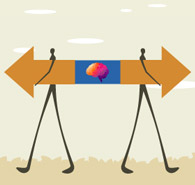
 The field of neurofeedback has found itself subject to conflicting forces over the past decades, and it may be helpful to articulate some of the key factors that are driving our evolution as a discipline. On the one hand, we are subject to the constraints of a health care practitioner guild, and on the other we find ourselves in the much more uncertain terrain of frontier science. The demands of both are in essential conflict. The practitioner guild must represent to the world that a coherent system of practice exists, one grounded hopefully on a coherent model that is subscribed to by all of the practitioners. Guidelines and standards of practice likely follow to clarify for practitioners the choices that have been made for the sake of a credibly defensible public posture.
On the other side we have the practical realities of frontier science, acknowledging that we are just beginning to understand the very powerful tool that we have at our disposal. The original hope (which I shared at the outset) was that a simple set of protocols derived from the original Sterman/Lubar research would serve our collective purposes. These simply needed to be pushed forward into general practice, while being subject merely to some subtle refinements. Our original NeuroCybernetics system was designed with very little flexibility because we did not see a need for it. This simple world view has had to be jettisoned.
Continue reading “Paradigm Paralysis, Panacea Paranoia, and Placebo Paralogism”


 This newsletter was first published in NeuroConnections, the joint publication of the AAPB and ISNR, Winter 2011