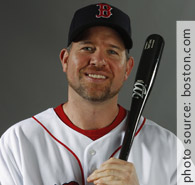
 For a number of years now I have been hearing from Leslie Coates in Florida about his work with a top-rated hitter in baseball. For reasons of client confidentiality, I never had a name to go with the story. When reporters would ask us about sports applications, the best story of all had to remain somewhat amorphous. At this year’s ISNR Conference the audience got to hear about the training directly from the person involved, Sean Casey, in a joint presentation with Leslie Coates and Wes Sime.
Sean Casey started out auspiciously in baseball, with a batting average of 0.461 in college at the University of Richmond. He was drafted into the Major Leagues by the Cincinnati Reds ten years ago, and soon after a promising start he was hit in the face by a ball he wasn’t expecting. The bones around the eye socket were broken, and although he tried to keep playing, his batting average hit bottom: 0/30. He was sent back to the minors, where he connected with sports psychologist Wes Sime, with whom he worked for two years.
 The program of the Northeast Regional Biofeedback Society Fall Conference, convening on the grounds of the former Women’s adjunct college of Rutgers University in New Brunswick, NJ, quite possibly pointed the way to our near-term future, namely the mutual accommodation of the biofeedback and neurofeedback perspectives. The one-day conference was preceded by an all-day seminar on Heart Rate Variability (HRV) training, conducted by Paul Lehrer, Bronya and Evgeny Vaschillo, and Maria Karavidas.
  Our migraine symposium was the last scheduled item on the program. It was to be conducted by Frank Andrasik, Jeff Carmen,
 I thought I would update everyone on some recent developments that were discussed at