On Suicidal Ideation and Self-Harm

EEG Info August Newsletter - NF session

We have been successful with quick recovery from suicidal episodes for as long as we have had a chance to work with such cases. This goes back to our early days with EEG band training, the 1990’s, and has continued on a better footing with our excursion into Infra-Low Frequency (ILF) Neurofeedback.* Single-session recoveries came to be expected. Other practitioners in our network reported similar results. Lasting relief from suicidality calls for more sessions. With extended histories of suicidality, recovery is going to involve longer-term training and complementary protocols.

Continue reading “On Suicidal Ideation and Self-Harm”

Endogenous Neuromodulation in the Larger Perspective of Neurofeedback

The Deep Roots of Endogenous Neuromodulation

The method of Endogenous Neuromodulation has come to dominate our work in neurofeedback. It is characterized by the absence of any discrete reinforcers, the distinguishing feature of the operant conditioning model. We still rely on a complementary inhibit scheme, but the discrete markers here are mere cues to the brain as to its state of dysregulation. They do not offer a prescription for change. The response is left to the discretion of the brain. In endogenous neuromodulation, this principle is extended more broadly: the response to the brain-derived signal is left entirely to the discretion of the brain itself.

As we regard our 38-year development trajectory in this field retrospectively, it is apparent that the element of endogenous neuromodulation was always present, even as we were still formally engaged with the operant conditioning model. First and foremost, there was the incorporation of EEG dynamics at the training frequency prominently in the feedback signal. In connection with his work on sensory substitution, Paul Bach-y-Rita was prompted to say: “If you give the brain any information about itself, it will make sense out of it.” If the brain is given information on its own dynamics, it will take advantage, and we refer to this aspect appropriately as endogenous neuromodulation. Here’s the early history:

Continue reading “Endogenous Neuromodulation in the Larger Perspective of Neurofeedback”
Sue Othmer’s Memorial: This Saturday, March 18, 2023

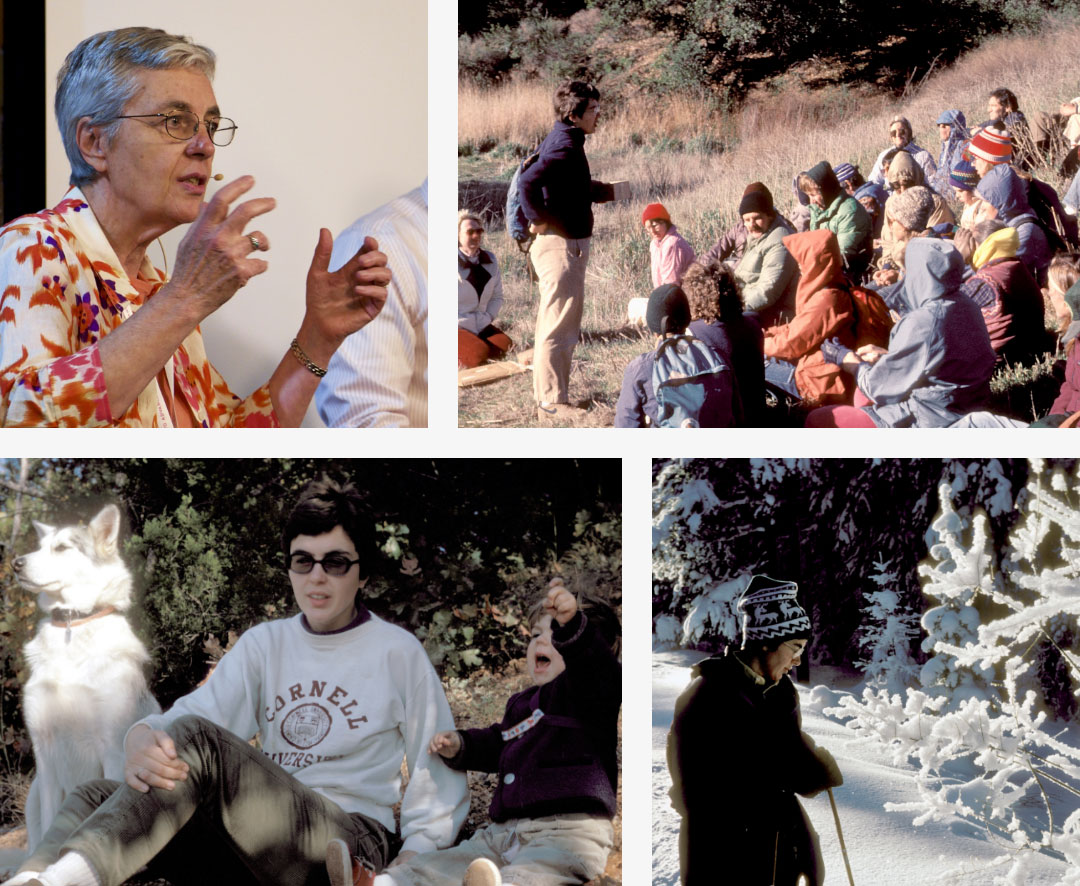
Sue Othmer collage

Thank you for all the support we have received over the last month. We are so moved by all the letters, flowers, cards, emails, donations. Sue was deeply loved.

  • The memorial will not be recorded or streamed. We look forward to seeing many of you in person although we wish it was under happier circumstances.
  • Everyone is welcome to join us for a hike after the memorial, weather permitting.
  • The hike will begin at 2:30pm in the Upper Las Virgenes Canyon Open Space Preserve, Western end of Victory Blvd, Woodland Hills, CA. There is a $3 parking fee to park inside the lot and your payment helps support the park. You can also find parking on the street outside the lot.

Thank you so much. See you Saturday.


Continue reading “Sue Othmer’s Memorial: This Saturday, March 18, 2023”

On the Life and Mission of Sue Othmer: February 1, 1944 to February 3, 2023

S usan FitzGerald Othmer died on February 3rd after three years of declining mental health, two days after her 79th birthday. This was Sue’s 38th year of involvement with neurofeedback.

A lover of nature who became a neuroscientist in the observational, naturalistic tradition of Oliver Sacks, Sue Othmer was a mother of three children, a teacher and community organizer, a gifted therapist and clinician, and a pioneer in neuroscience. Her life is best understood through the impact she has had on those around her. Unflappable, calm in the face of hardship, Sue navigated life with an even keel, a happy disposition, a unique self-sufficiency—steadying and nurturing those around her.

Continue reading “On the Life and Mission of Sue Othmer: February 1, 1944 to February 3, 2023”

A Case of PTSD and Dissociative Identity Disorder (DIDNOS)

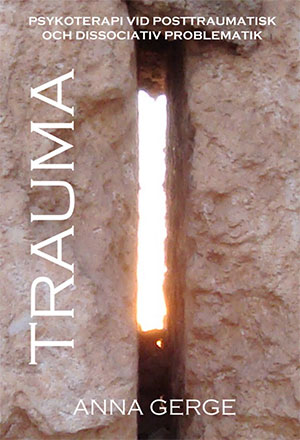
A dramatic case report has just been published on the extraordinarily quick recovery of a woman diagnosed with “severe and complex” PTSD and unspecified Dissociative Disorder. The author is trauma therapist Anna Gerge of Sweden, and the method was ten sessions of Infra-Low Frequency Neurofeedback, in combination with a single session of EMDR. Substantial resolution of PTSD symptoms and essentially complete resolution of dissociative events was achieved, and confirmed in four-month follow-up.

Continue reading “A Case of PTSD and Dissociative Identity Disorder (DIDNOS)”

Neurofeedback: The First Fifty Years

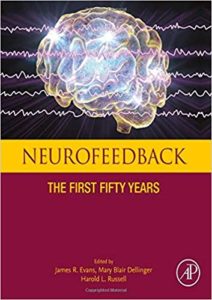
This weighty book of 500 pages has just reached us, and the editors deserve our gratitude and appreciation. Their labor has been a service to the field: Jim Evans, Mary Blair Dellinger, and the late Harold Russell. No neurofeedback denier could read this book and remain resolute in his convictions. As it has evolved over the decades, the field is too diverse and multi-fold to have emerged out of mere imaginings into a grand delusion. This is not to deny, however, that grand delusions have also been a motive force. And the disagreements among us have always played a much greater role than whatever beliefs we shared.

Continue reading “Neurofeedback: The First Fifty Years”