 The unlicensed practice of neurofeedback has arisen again as an issue with an article written by Cory Hammond that appeared in a recent issue of the National Psychologist newspaper. Following a concise and favorable introduction to neurofeedback, Cory Hammond wrote the following:
“It is crucial for licensed professionals
to report lay neurofeedback practitioners to
state regulatory bodies as practicing psychology
and medicine without a license when they are
found to be offering services for medical,
psychiatric and psychological conditions.”
One might on a first reading gain the impression that lay practitioners meant such people as enthusiastic home users who at some point decided to hang out a shingle, but when Dr. Hammond was asked whether he was including such unlicensed people as Professor Barry Sterman, the original researcher of the field, he replied:
“If he is offering clinical services to the public for medical,
psychiatric and psychological problems, without holding a clinical
license, he would be in violation of the law in almost every state.”
 It’s been a few months, and it’s been a total whirlwind here at EEG Info so let me try to remember all the way back to November for a moment. It seems like a year ago now, but that was about the time when all of us here at EEG Info held our breath as we put Cygnet out to you, our Neurofeedback community. We ordered 100 extra NeuroAmps, on top of our regular inventory, just to prepare for the rush that we hoped to get. We knew we had created something that fit our training model, that was easy to use, beautiful to look at, and functionally the most advanced design we have ever built. But what about you — the customer? Would you find it as intuitive, useful and appealing as we designed it to be? Would anyone actually appreciate all this hard work and huge amounts of money and energy and risk that went into the creation of this product?
  A few weeks ago the
  Sometimes we who work with
  We have just seen the new movie,
 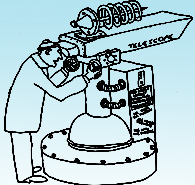 There is one field in which an extensive mutually beneficial relationship has existed between amateurs and professionals. It is in astronomy, and the phenomenon was recently taken up in Science Magazine by John Bohannon (Volume 318, 12 October 2007, pp 192-3). Significantly, this symbiosis is occurring in a science in which we have only limited ability to do experiments. Mostly the science is observational. Most of the scientific observations are specifically targeted and hypothesis-based. They are so numerous that time on the big observatories for each project is scarce and therefore precious. But there is another crucial aspect of astronomy that focuses on celestial events that are not predictable either in time or place. This is mostly where the amateurs come in. They represent a world-wide army of knowledgeable observers that is on watch every night around the globe.