 The program of the Northeast Regional Biofeedback Society Fall Conference, convening on the grounds of the former Women’s adjunct college of Rutgers University in New Brunswick, NJ, quite possibly pointed the way to our near-term future, namely the mutual accommodation of the biofeedback and neurofeedback perspectives. The one-day conference was preceded by an all-day seminar on Heart Rate Variability (HRV) training, conducted by Paul Lehrer, Bronya and Evgeny Vaschillo, and Maria Karavidas.
Ever since I first heard of the renaissance of HRV training on the basis of the pioneering Russian work in that area, I have been starting off the discussion of neurofeedback in our training courses with an introduction to HRV training. It illustrates a number of concepts that carry over into our work. It was a relief to hear that the essential concepts have only become even more firmly established over recent years. Continue reading “Northeast Regional Biofeedback Society Fall Conference”
 Some years ago, the Economist Magazine covered the nascent neurotechnologies and came up somewhat alarmed about our potential futures. If people were concerned about such issues as genetically modified foods, stem cell research, genetic screening, etc., they should really be worried about what the future has in store with regard to the alteration of brain function. That future looked really scary for its loosening of the moorings on who we are and who might have the power to shape our individual futures.
 The unlicensed practice of neurofeedback has arisen again as an issue with an article written by Cory Hammond that appeared in a recent issue of the
  Americans universally express appreciation for the service of our troops overseas. Yet so little is done to support the re-acclimation of our courageous soldiers upon their return home. This problem, which has been with us through many wars, will be exacerbated in the near future with the impending return of tens of thousands of veterans from Iraq — many of whom have served multiple tours of duty.
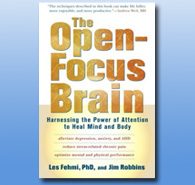 In this newsletter we take a look at two recently published books that represent two ends of the spectrum of neurofeedback approaches. They reflect divisions within the field that have remained unreconciled over the decades. They also reflect their authors, who have taken very different approaches in their scientific research.