


I invite practitioners and educational professionals to participate in my upcoming webinar on introducing self-regulation training into the educational setting, in order to reach the vast majority of children. We have known all along that we have no way of predicting the inherent competence of any brain. It is now an ethical burden to make the training generally available. The educational framing means first and foremost a shift to an optimal functioning focus as opposed to a deficit focus, which is the turf we already inhabit with our method. We also need to operate in an educational, skill-learning mode that allows children to feel empowered, to ‘own it’ as a core life skill. We also need to restrict ourselves to methods that are universally applicable, as all children will be included in the program. This implies the development of a multi-faceted, sequential training program that begins with objectives that do not involve instrumentation at all. Then traditional biofeedback methods will be introduced before neurofeedback is even attempted. The next step is protocol-based neurofeedback that doesn’t involve fine-tuning of the parameters. We will need buy-in from Special Ed teachers, so they will need to be trained up to manage these aspects. Those who clearly need personalized NF training will be allowed to access that through the traditional IEP programs. It is envisioned that agencies and independent practitioners will be able to contract with the school districts to deliver such services. This stratification is necessary so that we don’t bankrupt the school district. The benefit-cost ratio has to be positive throughout the evolution of the program.
Other themes in the talk cover the imperative need to move toward a prevention model in healthcare, which implies adopting an early intervention approach. For many, this needs to begin in infancy, or even with training the mother during gestation. The school experience is the first opportunity we have for nearly universal access to children in the early years.
This approach also has the cardinal virtue of emancipation from the medical model. The lack of self-regulatory competence is not an ‘indication’ calling for reimbursement in the medical model. Optimal functioning is what nearly all parents will aspire to for their children, once they are aware that this training is available outside of the medical regime that is necessarily thresholded by the severity of some recognized dysfunction. This nicely divides the turf between medical practitioners and everyone else. Inevitably, neurology and psychiatry will eventually see the light and recruit NF into their armamentarium. But that leaves the larger societal need unmet. That larger need can only be met with governmental sponsorship, just as is the case with education, with the vaccine regime, and with the healthcare system as well.
Please pass this information along to educational professionals.
————–
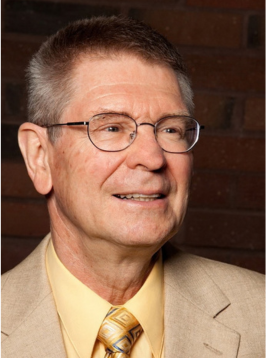
Introduction of Neurofeedback into Schools
Presented by Siegfried Othmer, PhD
Friday, November 13, 2026
12:00 noon Eastern time
11:00am Central Time | 9:00am Pacific Time
NOTE: This is a 90-minute presentation.
This is a FREE webinar, however, registration is required.
————–
Webinar Description:
The webinar will largely be a ‘big-picture’ presentation, one that envisions a conceptual shift from deficit focus to optimal functioning focus in our work. Our healthcare system is not getting us to health, and is in fact incapable of doing so. Given the centrality of early childhood trauma in the mental health universe, society has no alternative but to move toward a prevention/early intervention model. Self-regulatory competence is our foundational skill, and as such constitutes the core of any prevention model. This is entirely appropriate for the educational environment, by virtue of its exclusively positive framing. The training must become universally accessible as a public right, and only the school system can provide that access to the vast majority of children early in their life. Appropriate to the educational setting, children must be taught to ‘own the skill.’ It will not be merely a matter of training the brain.
Today’s schools are confronted with greater behavioral and academic challenges than was characteristic of past generations. We are encountering special needs kids at much higher rates than before. A recent study of Danish children found a doubling in mental health concerns among teenage girls over the course of fifteen years, accompanied by a decline in age of onset of four years. Chronic pain is a good barometer of both physical and emotional wellbeing, and children are at ‘epidemic’ levels in the developed world. A large minority of our children, if not a majority, exist in a state of poor self-regulatory competence.
The capacity to learn must be targeted wherever it is deficient before the educational project can succeed. A well-regulated nervous system is the necessary pre-condition. The efficient training of self-regulatory competence is now a realistic option for our school children upon entry into the system. The hierarchy of needs is well established. The foundational requirement is that the nervous system be stable. The second objective is the regulation of arousal, so that it can match up with the demands of the moment. The third objective is affect regulation and its correlate, autonomic regulation.
The very first training school children would be exposed to is breath training, so that they gain an appreciation of their native capacity to alter their physiological state for the better. This is typically experienced as empowering. With the addition of instrumental support, children then move onto Heart Rate Variability training. They may then also experience hand temperature training to moderate anxiety, as well as training of galvanic skin response to diminish levels of sympathetic over-activation. These are standard techniques that have been in use in biofeedback for decades.
Neurofeedback training is introduced to promote greater stability of the nervous system. Instability is most efficiently tested for by way of a Continuous Performance Test. Impulsivity is indexed by commission errors, and inattention is indexed by omission errors. Outcome testing of the 6-10-year cohort demonstrated an improvement in the median mental age from 6 years to 10 years in impulsivity, with twenty sessions of training. For the 10-20-year cohort, the improvement in median mental age was from 9 to 17 years with twenty sessions of training. With respect to inattention, the 6-10-year cohort improved from 6.2 to 8.5 in median mental age, and the 10-20-year cohort improved from 10.3 to 13.8 years. These results were based on more than 15,000 pre-post data sets covering children from various nations.
Results for the highly deficited cohort were also promising. The bottom 16th -percentile cohort (below one standard deviation) was depleted by two-thirds in terms of impulsivity, and by half in terms of inattention, over the course of 20 sessions. One-third ended up above norms in terms of impulsivity, and one quarter ended up above norms in terms of inattention. For children in deep functional deficit, 20 sessions of training is only a good beginning.
In a study of academic performance involving 15 children and adolescents, an improvement of 23 points in Wechsler IQ score was found in independent testing. This was accompanied by large improvements in the Benton Visual Retention Test and in the Tapping Subtest of the Harris Tests of Lateral Dominance. Two dominance reversals were observed. The testing psychologist observed that the gains were not simply academic. The children were more motivated. “These are different kids.” And parents reported behavioral improvements, along with major gains in self-esteem.
Results of the training for improved academic performance were highly variable among individuals, and hence were not predictable. The lack of predictability is an even greater issue when it comes to children on the autism spectrum. This motivates an ethical mandate that every child entering the school system be given the opportunity for brain training. This could be done under the rubric of ‘brain fitness,’ by analogy to physical fitness training.
If you cannot attend the live webinar, all paid registrants will receive a recording of the webinar. However, both APA and Neuroregulation CE credits are only available for attending the live presentation in its entirety. This program, when attended in its entirety, is available for 1.5 CE credits. Purchase your CE credit as you register. The CE certificate is a separate fee of $15.00 for 1.5 CE credits.
Date and Time: Friday, November 13, 2026
Agenda:
12:00pm – 1:20pm Presentation
1:15pm – 1:30pm Q&A
Location: Zoom
Presenter: Presented by Siegfried Othmer, PhD
Please Note: After registering, an email with a link to the webinar to register in Zoom will be sent to you. You will need to register in Zoom!
Who is the Audience: Psychologists, mental health clinicians, medical providers, social workers, educators/researchers, neurofeedback professionals
Level: Intermediate
Specific Learning objectives:
Based on the content of this presentation, the participant will be able to:
- Identify the primary objectives for physiological self-regulation in hierarchical order.
- Describe the rationale for giving primacy to the biofeedback modalities prior to offering the more critical neurofeedback training.
- Articulate the basis for offering the biofeedback and neurofeedback modalities to all children, rather than just to those who are in obvious need.
Fees: Webinar fee is FREE for all, however, registration IS required.
Continuing Education:
- CE certificate is a separate fee of $15.00 for 1.5 CE credits for this presentation. Registrants who have paid for a CE certificate and attended the presentation in its entirety will receive the APA certificate; the ISNR-approved certificate is available upon request by emailing cointinuinged@ISNR.org (included with payment for CE certificate).
- Purchase the CE credit as you register.
- This program, when attended in its entirety, is eligible for 1.5 CE credits.
- Evaluations and certificates will be distributed following the presentation.
Credits:
BCIA will issue 1.5 credits towards BCIA re-certification for full attendance at this webinar.
IQCB will issue 1.5 credits toward IQCB recertification for full attendance at this webinar as non-qeeg specific credit.
Satisfactory Completion:
This webinar provides 1.5 CEs sponsored by the International Society for Neuroregulation and Research (ISNR), which is approved by the American Psychological Association to sponsor continuing education for psychologists. This webinar is also accredited by the ISNR Neuroregulation CE Program which is designed in accordance with ISNR’s requirements of continuing education. ISNR maintains responsibility for this program and its content. Upon purchase of CE credit, you will receive a certificate approved by the APA. If you would like to request the certificate approved by ISNR, please email your request to continuing-ed@ISNR.org.
Most states accept continuing education courses offered by either CE Sponsors for APA or will accept the approval of other state licensing boards of the same license type. Some states, either do not require pre-approval of courses, or will allow licensees to retroactively file for course approval themselves. Check with your board to obtain a final ruling.
This webinar provides 1.5 CEs. This webinar is accredited by the ISNR Neuroregulation CE Program which is designed in accordance with ISNR’s requirements of continuing education. ISNR maintains responsibility for this program and its content. Upon purchase of CE credit and attendance of the live presentation in its entirety, you will receive a certificate.
ABOUT THE PRESENTER:
Siegfried Othmer is Chief Scientist at the EEG Institute in Los Angeles, CA, which is organized for the delivery of neurofeedback services and the training of professionals. Dr. Othmer received his Ph.D. in physics at Cornell University in 1970. Along with his late wife, neuroscientist Sue Othmer, he has been active in the development of EEG neurofeedback since 1985, when their first son Brian benefited from neurofeedback for his epilepsy. After an initial focus on ADHD, their work increasingly encompassed the more serious afflictions such as the autism spectrum, physical and emotional trauma, and developmental trauma. Othmers have been engaged in three generations of instrumentation design, the NeuroCybernetics, the EEGer, and Cygnet. These instruments implemented the technique of endogenous neuromodulation, which in 2006 was extended into the Infra-Low Frequency domain. Siegfried authored two books: “ADD: The Twenty-Hour Solution” (with co-author Mark Steinberg), and “Brian’s Legacy.”
Refund/Cancellation Policy: If you sign up and pay for a webinar but are unable to attend the live presentation, you will be provided with access to the recorded webinar; refunds will not be issued.
ISNR is committed to accessibility and non-discrimination in its continuing education activities. Participants are asked to be aware of the need for privacy and confidentiality throughout the program. If program content becomes stressful, participants are encouraged to bring their concerns up during the question and discussion period, typically held at the end of the presentation. A moderator will be available during the presentation. If participants have special needs, we will attempt to accommodate them.
Please address questions, concerns, and any complaints to:
Susan Alvarez, ISNR Executive Director
ISNR, 2146 Roswell Road, Suite 108, PMB 736, Marietta, GA 30062
Tel: (703) 848-1994
office@ISNR.org
Because these presentations will be done online, it will be the responsibility of the participant to provide adequate and appropriate computer availability as well as internet connections that will support this webinar. All efforts and reasonable accommodations will be made to make the information accessible to persons with disabilities.
While this presentation offers no risk in and of itself, it is the responsibility of the individual attendee to determine any risks involved in the implementation of the contents of this presentation.
EEG Institute, 21700 Oxnard St., Suite 1150, Woodland Hills, CA 91367, USA, 818-456-5964
